

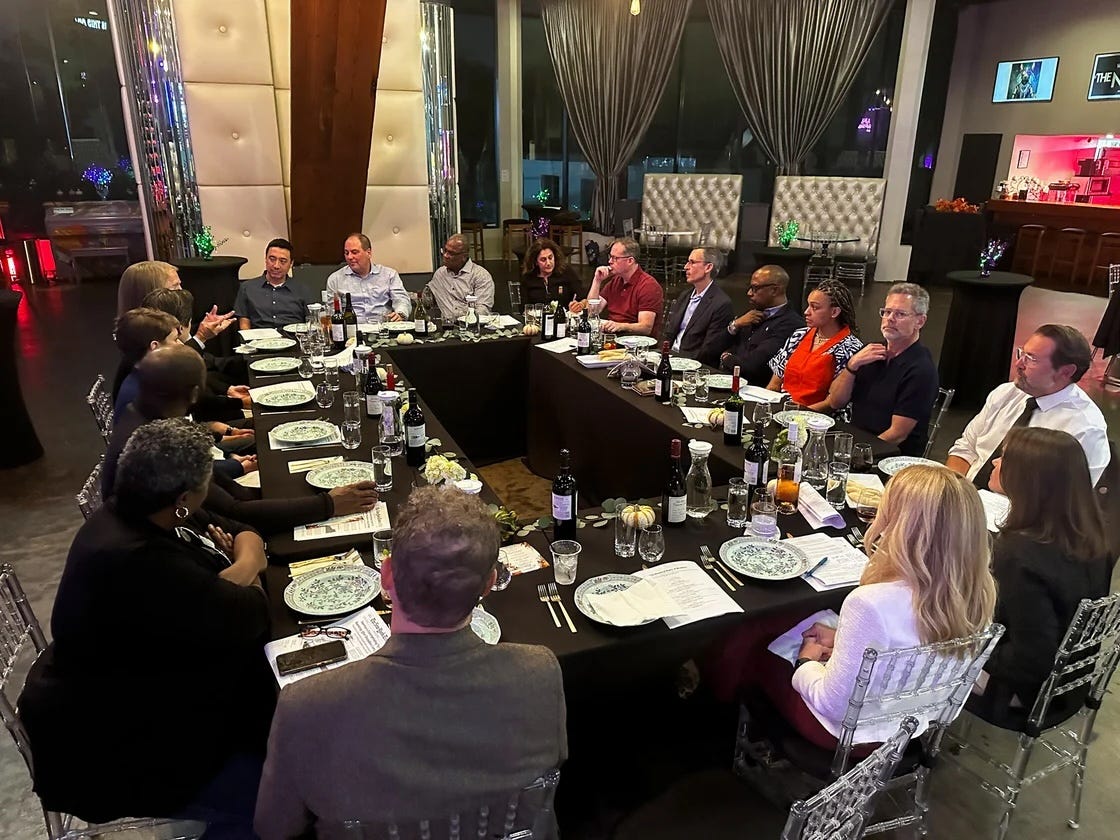
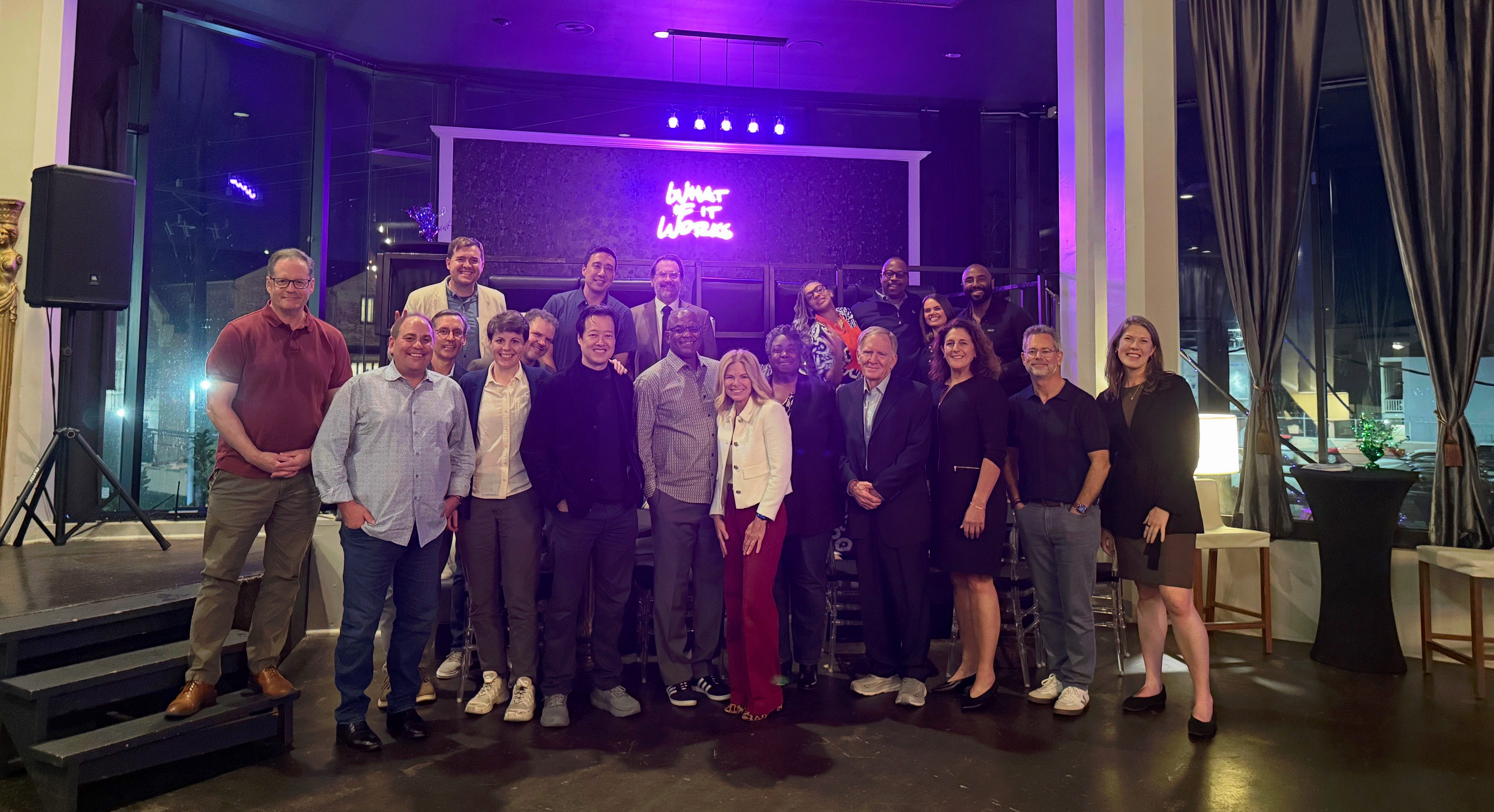
On October 28, a small group of architects of the modern entrepreneurship movement gathered in New Orleans for dinner and discussion.
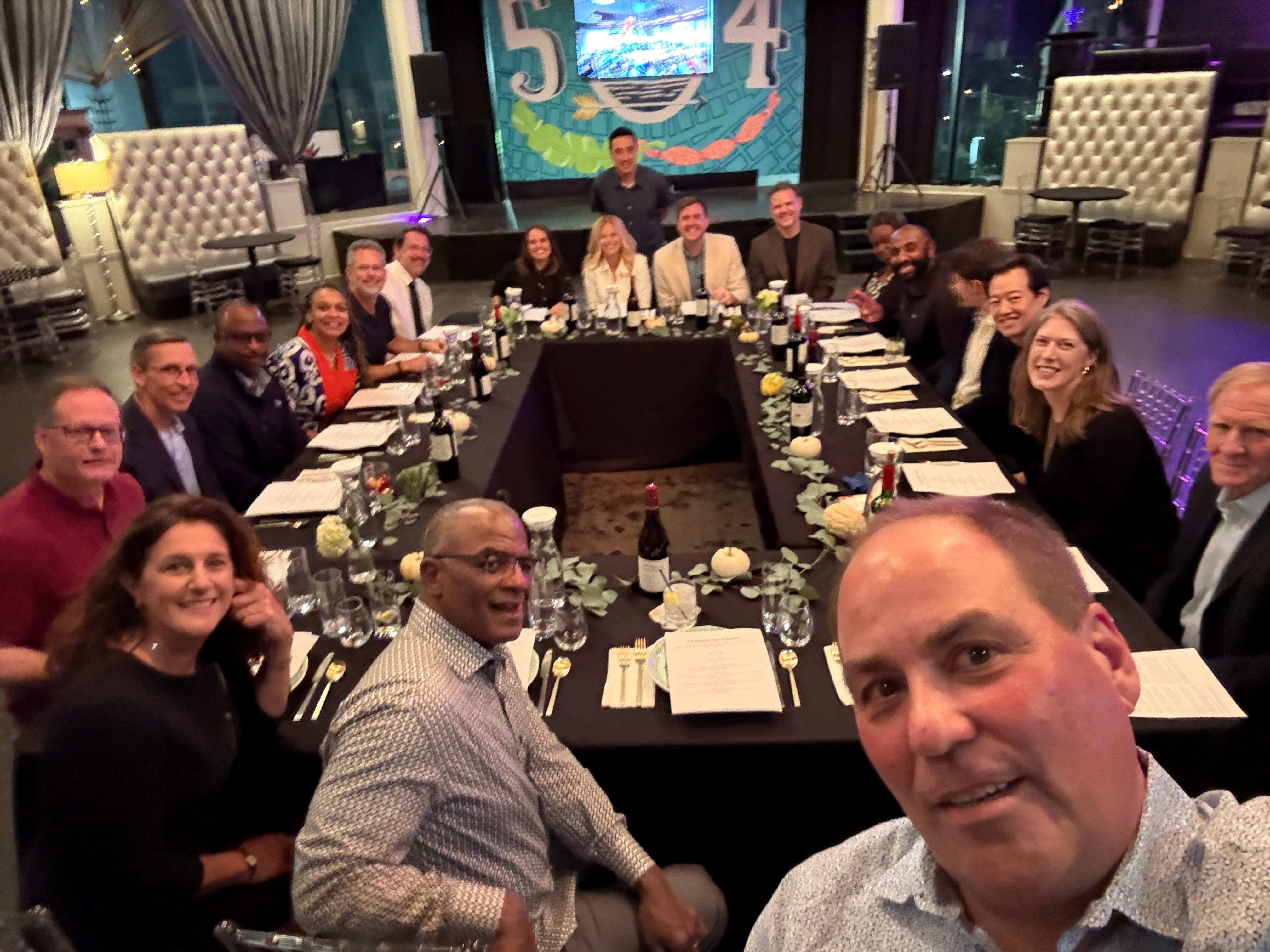
These were people who had spent decades helping communities support entrepreneurs, often before the work had a name, a budget, or an institutional home.
The International Economic Development Corporation conference had brought economic development leaders to town, putting entrepreneurship on the main stage. It was a fitting backdrop for a conversation about how far the work had come and what comes next.
Before dinner, individual conversations through Decision Lab helped us understand where our experiences and questions overlapped. Around the table, we could go deeper.
After the conversation, Victor Hwang, Founder Right to Start, offered an observation that stayed with me: this moment represents the end of the pirate phase of entrepreneurship.

I recognized something in that idea immediately.
For years, many of us had worked outside established structures, filling gaps that institutions weren’t addressing. Now those institutions were embracing the work we had spent decades trying to get them to recognize.
We had wanted that to happen.
But what happens to the pirates when it does?
Before the work had a name
My mind went back to New Orleans in 2000, when I helped start Idea Village.

I didn’t do it because I wanted to run a nonprofit. I did it because the institutions you would expect to support entrepreneurship weren’t focused on it.
Universities. Government. The Chambers. Economic development organizations.
There were people with ideas. People willing to take risks. People who wanted to build businesses and a future in their own city. But helping them find one another and the support they needed - wasn’t anyone’s clear responsibility.
There was a gap. Someone had to fill it.
In 2001, we asked the CEO of the regional chamber to take the lead in building an entrepreneurship program and making it part of economic development.
His answer was no.
When we pressed him, he asked:
“What if it fails?”
That question has stayed with me for twenty-five years.
It captured a mindset much bigger than one person or one institution. We were looking at the same community and seeing different risks. He saw the risk of trying something that might fail. We saw the risk of leaving things as they were.
So we kept going.
Across America, other people were doing versions of the same thing.
Gathering entrepreneurs in coffee shops, bars, and borrowed offices. Connecting founders to mentors. Asking their communities to take a chance on the talent already there
Some pushed from inside institutions. Others started organizations because there was nowhere else to do the work.
Those were the pirate years: people pursuing possibilities that didn’t fit an existing budget, job description, or strategic plan.
The work came first. The language came later. The funding often came much later. Sometimes, funding never came.
We asked favors. Borrowed credibility. Built trust one conversation at a time. Occasionally, we made commitments before we knew exactly how we would deliver on them.
And we kept bringing people together.
From the outside, it might have looked like another event. From the inside, we were trying to change what people believed was possible in their own communities.
When the establishment starts playing your music
History has many versions of this story.
In the 1960s, British pirate radio stations broadcast from ships offshore, reaching young listeners who wanted more of the music established broadcasting wasn’t adequately providing.
In 1967, the BBC launched Radio 1 for that audience. Former pirate DJs became mainstream broadcasters.
Imagine that transition. The establishment is playing your music and hiring your people.
You helped change the system. Now you have to figure out your place in it.
We wanted this to happen
You can see the shift in classrooms and public budgets. Entrepreneurship has become part of the economic development conversation happening around us. Work we once struggled to explain now had programs, professional roles, institutional commitments, and public funding behind it.
According to the Kauffman Foundation, roughly 400 U.S. universities offered entrepreneurship classes in 1995. By 2012, more than 2,000 did.
In 2021, the American Rescue Plan provided $10 billion for the State Small Business Credit Initiative, supporting state programs, including $500 million for technical assistance.
In 2024, the U.S. Economic Development Administration announced a $50 million Build to Scale funding opportunity specifically to strengthen entrepreneurial ecosystems and help technology entrepreneurs grow
These investments don’t mean every entrepreneur can get help. The gaps remain significant.
But the conversation has changed.
We once spent much of our time explaining why entrepreneurship belonged on the agenda. Now we can spend more of it asking how to do the work well, who is being left out, and what actually helps people build.
That matters.
We wanted institutions to take entrepreneurs seriously. We wanted resources committed to the work. We wanted someone starting a business to find a clearer path than the one we had.
We wanted people to stay in our communities.
We wanted this to become bigger than us.
The strange feeling of succeeding
Success can feel strange.
The programs become more formal. New people arrive with titles for things you were doing before anyone knew what to call them.
You can be proud of the progress and still wonder where you belong.
You can welcome the funding and miss the freedom. Appreciate the professional standards and worry about losing the personal relationships that made the work possible.
But we should also ask ourselves whether we have become attached to being the outsiders.
Are we comfortable with the work continuing without us holding every relationship, raising every dollar, or opening every door?
A movement needs people who can start things.
It also needs people who can sustain them, improve them, and take them further.
That means giving successors real responsibility. Sharing our mistakes. Accepting that someone else may have a better way.
And it means leaving room for the next pirate.
Someone without the right title. An idea outside the strategic plan. A possibility that doesn’t yet have enough evidence to satisfy a committee.
Will we help that person?
Will we ask, “What if it fails?”
The next pirate may make us as uncomfortable as we once made other people. I hope we remember that before we close the door.
And I hope we honor the people who helped get us here.
Remember who helped build it
Professional football offers another lesson.
The Pro Football Hall of Fame opened in 1963, forty-three years after the NFL began. As the game grew into a national institution, it created a place to honor its history.
Its first class included players and builders such as Jim Thorpe, George Halas, and Curly Lambeau. The same institution later welcomed Joe Montana in 2000 and Drew Brees in 2026.
Different eras. Different contributions. One continuing story.

How will we preserve the stories of the people who built this field? How will the next generation learn whose shoulders they’re standing on? People like Andy Stoll, who has helped build this work from the ground up while helping others find their place in it. His contribution is both in the work itself and in helping create a professional path for those who follow.
The connectors. The conveners. The people who started organizations that barely survived. The people inside institutions who put their credibility behind an unproven idea.
At the end of dinner, a conversation with Chris Gibbons made that question personal.
Chris is one of the original pirates, a pioneer of economic gardening who has spent decades helping communities think differently about growing their own businesses.
He told me the evening had made him feel good. He hoped his wife would be proud of the work he had done over the last forty years.
That stayed with me.
We had come together to talk about the future. We also gave one another a chance to appreciate what those years of work had made possible.
I hope Chris left knowing how much his work meant to the people in that room.
And I hope his wife knows, too.
Welcoming What’s Next
Victor had given us a way to understand the moment. Chris reminded me of the people who had brought us to it.
Some will keep strengthening this work. Some will become mentors and guides. Some are ready to begin again.
Over the last 40 years, the question we heard was: “What if it fails?”
Our response was: “What if it works?”
Now that it has taken root, the question for the pirates is: “What needs a chance next?”
We raise a glass to the people who made it happen. We pass along what we’ve learned. We cheer on the people taking it further.
Then we go find another adventure.
Another gap. Another idea without a home. Another possibility waiting for someone willing to take a chance.
And we can’t help ourselves.
It’s the only thing we know how to do.
Tim, your question about becoming attached to being outsiders is important. Entrusting successors with real responsibility requires accepting decisions we may not have made ourselves. Recognizing this when new leadership emerges will be a key test of our success.